
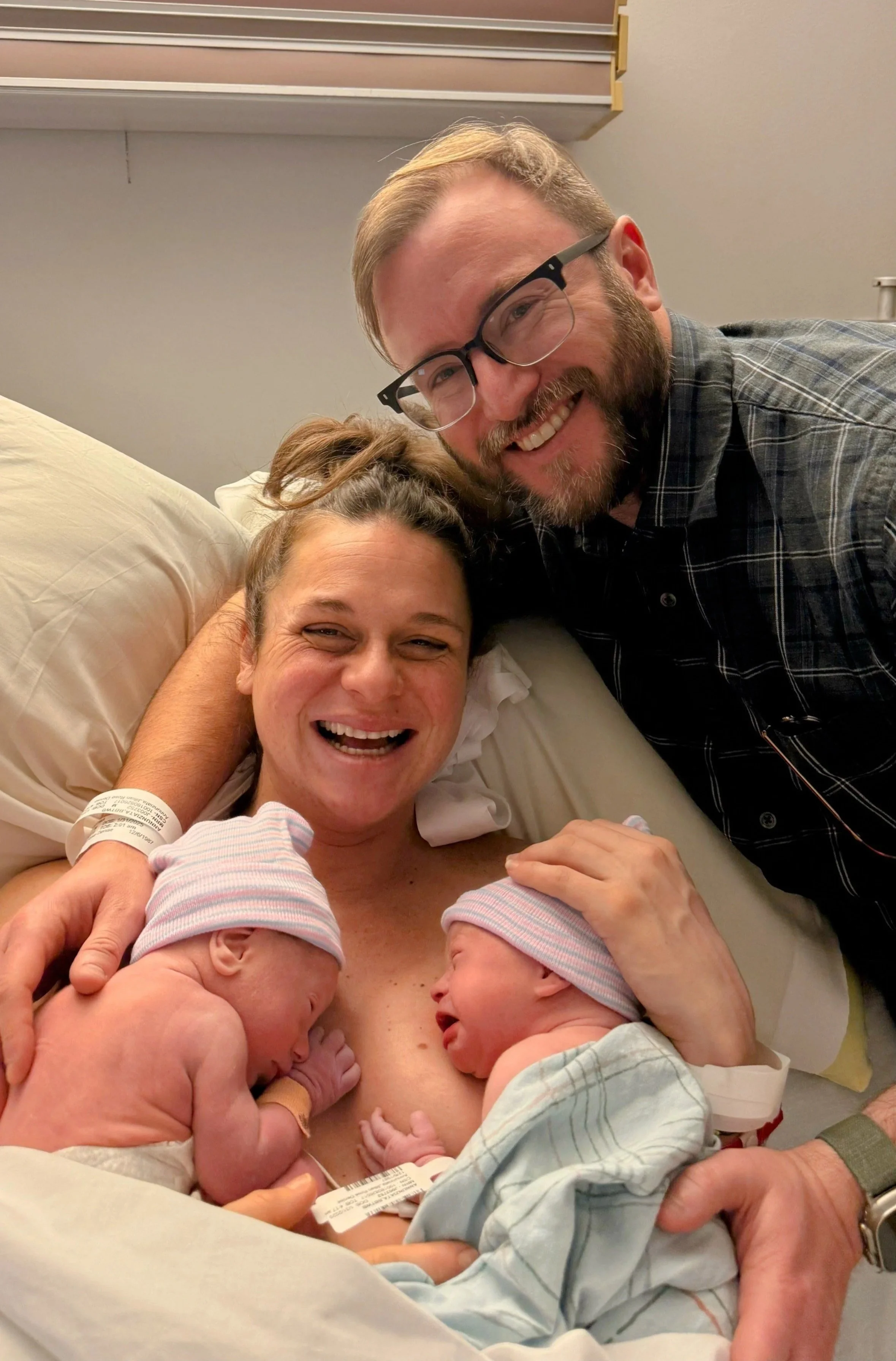
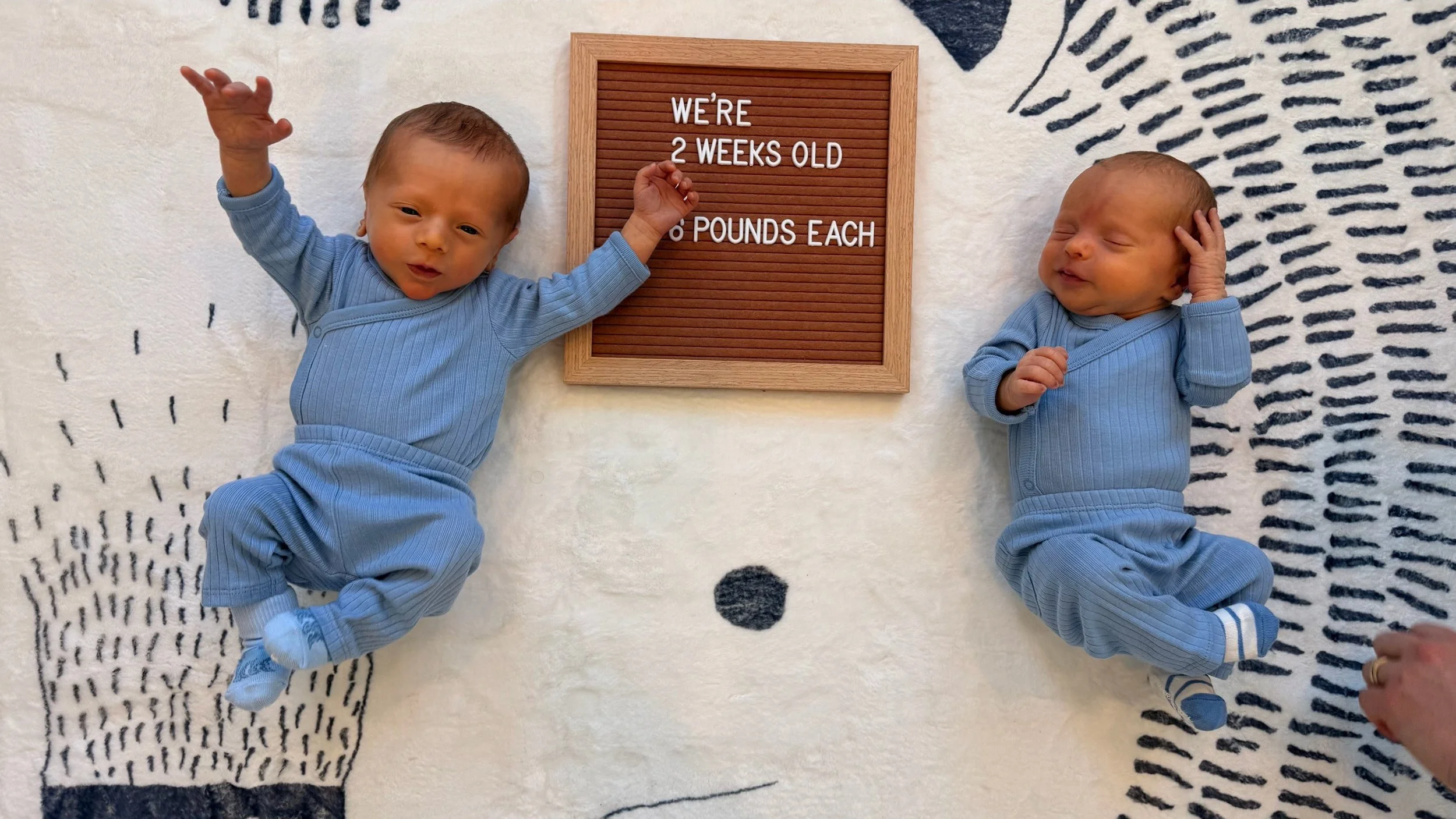
Jillian and her partner Danny share the story of the birth of their fraternal twin boys. Jill recounts a pregnancy full of unexpected twists — from the surprising discovery of twins, to a sprained ankle, a short cervix scare at 28 weeks, and modified bedrest — while drawing support from local twin families in Astoria and other community resources. She describes going into spontaneous labor at 37 weeks and 5 days, delivering both boys vaginally in a remarkably swift 10-hour labor, including a mid-delivery move from the OR back to a labor and delivery suite where she could have a bit closer to the kind of birth she had hoped for. The episode also covers a brief but emotionally intense NICU stay for Owen, the logistical complexity of caring for one baby at home and one in the hospital, the couple's tandem breastfeeding journey with twins, the invaluable support of their postpartum doula, and Danny's candid reflections on being his partner's primary support person in the delivery room — including a very large 2-in-1-ish placenta that almost didn't fit in its container.
Resources:
Twiniversity - Nat Diaz (classes, monthly groups, book)
Twins in the City - twins resources (some NYC-specific)
Yug Wellness - prenatal yoga
Spear Physical Therapy (Astoria), McKenna Boyd (pelvic floor therapy)
5 S’s / The Happiest Baby on the Block by Harvey Karp - book | video*
The NICU Translator - private support for NICU families & a FREE “Life After NICU support community” (they also train doulas to support families who have NICU babies)
Sponsor links:
Free “Pack for Your Best Birth” Packing List (with free mini-course option)
East River Doula Collective (find a doula, attend our free “Meet the Doulas” event)
Birth Matters NYC Childbirth Education Classes (Astoria, Queens and virtual)
*Disclosure: Links on this page to products are affiliate links; I will receive a small commission on any products you purchase at no additional cost to you.
Episode Topics:
Finding out you're expecting twins and the initial shock and adjustment
Navigating provider options as a high-risk twin pregnancy – why midwife care wasn't possible and choosing an OB team known for vaginal twin deliveries
Understanding twin pregnancy types – the difference between dizygotic (di/di) twins versus identical twins sharing a placenta or amniotic sac
Pregnancy complications along the way – sprained ankle, short cervix at 28 weeks, modified bedrest, progesterone supplementation
Maintaining prenatal yoga and pelvic floor physical therapy throughout a high-risk pregnancy
Managing carpal tunnel and wrist issues (mommy wrist) during pregnancy
The emotional journey of letting go of expectations – grieving the birth experience you hoped for and adjusting expectations at every turn
Building a twin-specific community through local WhatsApp groups and neighborhood connections
Twin Diversity with Nat Diaz as a resource – webinars, books, classes, and registry guidance for twin families
Taking a childbirth education class and why timing matters especially for parents expecting multiples
Developing a birth preferences list for a high-risk delivery – what was negotiable and what wasn't, and navigating last-minute provider changes
How labor started – spontaneous water breaking at 37 weeks 5 days, preparing a hearty meal, heading to the hospital
The progression of labor – triage, epidural timing, and working through intense contractions
Laboring and delivering in the operating room due to twin pregnancy protocols
Practicing pushing technique with the OB before active delivery
Delivering Baby A vaginally – anterior position, delayed cord clamping, skin-to-skin in the OR
The partner's role during twin delivery – running between two babies, holding legs, advocating for birth preferences, being present without a doula
Delivering Baby B – the baby being high and partially transverse, repositioning, waiting two-plus hours between births, moving from the OR back to labor and delivery
Pain management options – epidural, fentanyl, and the experience of one wearing off before the second delivery
The remarkable experience of nursing the first baby while actively contracting with the second
Placenta delivery – the combined twin placenta weighing six pounds, nearly a hospital record
Postpartum NICU admission – Baby B's brief respiratory issue and use of CPAP after birth
Baby Owen's NICU stay for a small air pocket around the lung, monitoring, and eventual discharge
Both babies coming home together
Jaundice treatment for both babies – UV light therapy, heel prick monitoring, temporary formula supplementation
The logistical complexity of having one baby home and one in the NICU – pediatrician visits, hospital visits, pumping, and emotional strain
The emotional toll of the NICU week – surviving on adrenaline, the crash around five weeks postpartum for both parents
Tandem breastfeeding twins – using the My Brest Friend double nursing pillow, football hold, keeping babies on the same feeding schedule
Lactation support resources – hospital IBCLCs, insurance-covered virtual lactation consultant, Twin Diversity postpartum groups
Why syncing twins' feeding schedules matters and how it protects parental mental health
Pacifier use without nipple confusion after early NICU introduction
Postpartum doula support through the East River Doula Collective – what Demi helped with and when they hired her
Deciding not to hire a birth doula for a twin OR delivery and what that meant for the partner's role
The five S's from Happiest Baby on the Block – swaddling, shushing, and soothing as a saving grace from day one
Postpartum mental health – the crash around five weeks, both parents hitting a wall, the importance of family support, and the partner joining a new dad support group
Danny's perspective – witnessing the birth, being present at the delivery, the moment Jill's water broke and their different reactions to urgency
The value of finding a provider team experienced with vaginal twin deliveries and turning a transverse second baby
Advice for expectant parents of multiples – leave room for positive outcomes alongside realistic expectations, advocate for your preferences, and build your community early
Interview Transcript
Lisa: 00:00
You're listening to the Birth Matters Podcast, episode 138.
Jillian:I got to nurse little baby A, and that was just beautiful. And I have videos my husband took of me like excitedly nursing him and getting coached and how to do that, but then wincing, you could see my eyes being like in pain because I was contracting with the other baby at the same time. That's unbelievable to this day. They helped each other be born.
Lisa: 00:37
Hey there and welcome to the Birth Matters Show. I'm your host, Lisa Greaves Taylor, founder of Birth Matters NYC and director of East River Doula Collective. I'm a childbirth educator, birth doula, and lactation counselor, and I've been passionately supporting growing families since 2009. This show is here to lessen your overwhelm on the journey into parenthood by equipping and encouraging you with current, best evidence info, and soulful interviews with parents and birth pros. Please keep in mind the information on this show is not intended as medical advice or to diagnose or treat any medical conditions. Did you know you can sign up to receive email updates whenever a new episode goes live? Visit birthmattershow.com to join our podcast community. In today's birth story, Jillian and her partner Danny share the story of the birth of their fraternal twin boys. This is our first twin birth story. Jill recounts a pregnancy full of unexpected twists from the surprising discovery of twins to a sprained ankle, a short cervix scare at 28 weeks, and modified bed rest, while drawing support from local twin families in Astoria and other community resources. She describes going into spontaneous labor at 37 weeks and five days, delivering both boys vaginally in a remarkably swift 10-hour labor, including a mid-delivery move from the OR back to a labor and delivery suite where she could have a bit closer to the kind of birth she had hoped for. This story also covers a brief but emotionally intense NICU stay for Owen, the logistical complexity of caring for one baby at home and one in the hospital, the couple's tandem breastfeeding journey with twins, the invaluable support of their postpartum doula, and Danny's candid reflections on being his partner's primary support person in the delivery room, including a very large two-in-one-ish placenta that almost didn't fit in its container. On a personal note, I just wanted to share that I'm really sorry it's been so long since we've aired a new birth story episode. It had to take the back burner for a while as I prioritized our daughter's final semester of high school and supporting her through that. She just graduated last Monday and of course had all the festivities leading up to it, such as prom and awards ceremonies and musical and play performances. So I'm finally trying to air this one before we take off to visit family for the July 4th holiday. I still do have a few more birth stories just waiting to be edited and finished up that I will try really hard to get published over the summer. We'll just have to see how things go, helping her prepare to move to college while also trying to savor the last few weeks with her before she flies the nest. Before we hear from Gillian and Danny, a quick word from our sponsor. Our all-in-one childbirth class series are filling up really quickly for the fall, so if you're due in the next few months, be sure to grab your spot soon. And just a reminder that if you don't live in New York City or you just don't want to have to travel for childbirth class, we would love to have you join us for our live group interactive class series virtually on Zoom. A lot of folks have found this to be a very convenient option while still having the benefit of being able to chime in and ask questions in real time. This format is also priced lower than the in-person options, so it's a great option for folks with a more limited budget. You can check out this option as well as several other childbirth class options like private classes and our online on-demand course, all over at birthmattersnyc.com. And finally, just wanted to give you a heads up that a couple of events that we normally have every few weeks, both Meet the Doulas with East River Doula Collective, as well as the Savvy Birth 101 workshop that I teach, are both on hiatus for this summer, but stay tuned for our fall dates. All right, now let's hear from Jillian, mostly Jillian, and a little bit of Danny at the end. Today I have with me a former student of mine from BirthClass. Welcome, Jill. Thank you so much for having me, Lisa. It's great to be here. Danny may join us at some point. Danny's putting down the twins. So I'm so excited to have our first twin birth story for the podcast. Would you first just please take a moment to introduce yourself a little bit?

Jillian: 05:14
Sure. So my name is Jill Jillian Anunziata. I live in Astoria. So we joined Lisa's class in December of 2024. And we love our community. We live right on Astoria Park and have just been really engaged in the community here as we've prepared to become parents through Lisa's class and other things. And now as we've become parents, I work for New York State Department of Health in Medicaid specifically, and work on social drivers of health and incorporating assessment of those unmet needs, health-related social needs into all different care settings to address them and provide services to meet those unmet needs. So that's who I am, what I do, where I live. And I gave birth to my paternal twin boys on January 31st. So last day of the month. It was a whirlwind of a start to the year, but they were a nice little cap of the on that first month. They were both born in the middle of the night, very early in the morning.
Lisa: 06:18
We'll get into all those juicy details before we dive into all of that. Were they born around the time that you were expecting for twins to come or not?
Jillian: 06:29
Twins come on average at 36 weeks, and most providers don't let you go past 38. So I was going to be induced at 38 weeks two days later, but I went into labor spontaneously at 37 weeks, five days. Because of a scare we had actually at 28 weeks, I was expecting to only make it to 36 if I was lucky, but ended up making it well beyond that and as far as I could have gone. Great. Thanks for that little sneak peek into what we'll dive into in a bit.
Lisa: 07:00
I want to mention that it was so fun. We had our reunion that we have twice a year. Most of the time we have it twice a year. And this past weekend, I got to meet the twins, and it was so exciting. Another first in my work that I do was that I've never had two households having twins in the same birth class cohort. And then both families attended the reunion, and that was so much fun. That just extra spark of joy in my heart.
Jillian: 07:30
So you have to send that picture we got. Yeah.
Lisa: 07:33
Yes. Yeah. I and I might ask the other family if they're okay, all of you, if you're okay with my sharing that in the show notes, because it just was such a fun thing. It's okay if y'all aren't comfortable. We'll talk about that later afterwards. But yeah, I will definitely send it.
Jillian: 07:48
We become friends with them. They moved on to our block. So we had them on for dinner while we were both pregnant, actually, like a week before I gave birth. And now we're hoping that our children will be friends for life and we can say that they've known each other since utero.
Lisa: 08:00
Absolutely. I love it when that happens. Although that specific circumstance has never happened, but people who've met in birth class have really hit it off and have become lifelong friends. So I love that. Really cool. And I have extended the invitation to them to share. You both had very different birth experiences. And I think it would be helpful if they're willing. They're just going to sit with it and see if it feels aligned for them. But that would be really cool to have both stories, especially now since you're friends.
Jillian: 08:29
Yeah, absolutely.
Lisa: 08:32
So that's interesting. Yeah, yeah. So will you please just start by sharing anything you'd like to share about your conception and or pregnancy journey and the ways that you prepared to become parents of twins?
Jillian: 08:48
Sure. So we conceived actually right around this weekend of last year, and we went in a few weeks later to confirm and were very shocked by the news that it was twins. The provider actually said to my husband, I've never seen a partner so flustered by this news. And she offered him water and was just like, Do you need to sit down? Because we were surprised. Fraternal twins are hereditary, but there's no history of them in my family. And it usually runs on the maternal line. Again, no history that we're aware of. So we did not have it on our radar at all. It's not like a lot of folks who are hoping for twins. So it was just shocking and exciting. And we still can't believe it, honestly, staring at two tiny babies. It breaks the brain slightly. So I bet I can only imagine. So yeah, it's been wild from the start. But yeah, we quickly got to work pivoting certain things to adjust for that, such as I had been wanting to work with a midwife, and I was just like testing the water. So the OB told us we were having twins because I also wanted to see an OB, and then I was planning to see a midwife, but I was leaning in that direction. But then once we learned we were having twins, the midwife community that I was talking to said they couldn't take us on because it was a high-risk pregnancy. And they referred us to the OB team, Dr. Shalina and Dr. Ree. And they have a midwife who works with them for a long time in the industry in Manhattan, who are like revered by the midwife community and known for doing V backs and all these different things. We thought that we'd be in good hands with them, but also safe given the complexity of twins as a high-risk pregnancy. So that's how the journey started.
Lisa: 10:44
Thank you so much. I don't know if I told you when you took class that Dr. Reed caught my first baby 20 years ago.
Jillian: 10:53
Yeah, so they have been around a long time. Yeah, they're both seasoned, like serious ladies. And our neighbor and another friend of mine also delivered their babies with Dr. Reed. And we were working with Shalina throughout the pregnancy with prenatal visits and really loved her and only met Dr. Ree the week before as the obligatory meeting just in case. And we weren't expecting to work with her because they had told me my uterus was so distended. I was measuring 44 weeks pregnant and it was unlikely that I would contract spontaneously. And so that's why they had the induction in mind. But my provider, Dr. Shalina, was out of office, and it ended up being that Dr. Ree, when we saw her, we didn't talk about birth preferences. We didn't really, I didn't think it was gonna happen, but she had a hunch and she was right. And so that few days later, she ended up delivering our baby, Dr. Ree, but she did really well, and that was a big part of our journey. Of course, it was like that change at the last minute, but she ended up delivering our baby too, after all.
Lisa: 12:01
Wow. So were there any developments along the way? You mentioned something at 28 weeks, I think.
Jillian: 12:07
Yeah. So thankfully the twin pregnancy was the least complicated type. It was di-di. So there were two placentas, two amniotic sacs, much less complicated than an identical twin pregnancies where there's one of those things and resources are more constrained, etc. So that was working in our favor as in the roller coaster of this journey. We realized it was twins, we couldn't work with the midwives. We found these OBs, we had this relief that it was the least complicated type. And so we just wrapped our brains around the twin thing and coasted into the second trimaster. But then at I don't even know when it was about, probably 20 weeks, I sprained my ankle. Oh no. Leaving that visit where you get tested for gestational diabetes, actually. So I think I was a little woozy or whatever, and that was not ideal, but I ended up being just in a boot for a week. It was like a moderate sprain. And then yeah, at 28 weeks, I was at an ultrasound visit, and I think I was a little dehydrated, so I was having Braxton Hicks contractions. So they sent me in for monitoring. I ended up having a short cervix because of the weight of the twins at that stage. So that plus the contractions, I stayed overnight and I went on progesterone to just prevent preterm labor. And I was also on modified bed rest from that point forward until about like 35 weeks when it was a lesser risk if I go into labor. And so that was not full-blown bed rest, but I just couldn't walk more than like a few blocks, and I couldn't. I was able to continue doing prenatal yoga, thankfully, and I started pelvic floor PT later in the process, and so I could do some stuff, but it was definitely scary at the time, and I was needing to be low-key after that point.
Lisa: 14:04
Can I ask you when you first found out you were having twins, were there any resources that you found that were helpful in just understanding the different kinds of twins? And I don't know, helping you feel a little more prepared.
Jillian: 14:20
Yeah, I would say there were two main ones. One was through the Astoria mom Facebook group. I put out a question of is there a twin version of this? And one of the twin moms scooped me up and told me there was a WhatsApp that they have, a WhatsApp group of 35 moms, twin moms in Astoria.
Lisa: 14:44
What? No way, that's so cool. I didn't know there was such a large group. That's really cool.
Jillian: 14:48

Isn't that wild? And we pick up speaking of wild, we say we pick up like new twin families in the wild every day. Someone will meet someone walking down the street and be like, Are you in our group? No, do you want to join? It's so cool.
Lisa: 15:04
Is that through the raising Astoria WhatsApp?
Jillian: 15:06
No, it's its own little thing. Different one. We just have started like a twin dad offshoot. But it's structured the same way. But yeah, it was wild how many twins there are, first of all, just in this community and growing by the day. But also, I was able to get a bunch of hand-me-down secondhand things in doubles from them, like our twin bassinet, a couple of Mamaros, X, Y, Z, a ton of bottles, like in mass, as you need them for twins. Amazing from all of them. And just the advice, of course, constantly like hearing about their experiences and me being able to put out questions related to all the pregnancy-related questions and fears. So they were huge, and thankfully I got in early. And while I was still pregnant, a lot of them weren't added until after they had kids, and they were walking around with a stroller. So very grateful that I had them during the pregnancy. And then this thing, have you heard of twin adversity? I have, yeah. Yeah, okay. So Nat Diaz is the founder of it. She has a bunch of resources for twin families. So I would join her free month webinars that were like delivery day boot camp and what to do when you're breastfeeding, too, and how to build a registry for twins. What do you need two of? What do you not? So she's a great resource. I read her books, ended up going to her office in Long Island City and choosing our pediatrician because she's embedded into her office. She's actually not anymore, sadly, as of a couple weeks ago. But we met her in person, we read her books, we tended her resources, we bought a few of her classes on different things, and that was a good resource for us too.
Lisa: 16:47
I don't think I knew that's a local resource. Yeah. That's so great. I think in my mind it was like a yeah, it was like an online thing in my head.
Jillian: 16:55
So that's and and it is international and very international. A lot of folks tap into her, but she happens to be local.
Lisa: 17:02
I love it. Nice. So, any other things to note about pregnancy before you go on into your birth story?
Jillian: 17:12
Think for a second. I'll just say I mentioned prenatal yoga. So I actually started going to Yug in Astoria 10 weeks. So it was post the twin news, but very early. And I knew I could do it.
Lisa: 17:24
You felt well enough, huh? Oh yeah. Good for you. Amazing.
Jillian: 17:28
Yeah. I had occasional waves of nausea, but it wasn't debilitating. Thankfully, it didn't affect my appetite. And yeah, I felt until that 28, until the sprained ankle, I felt great. And even after the sprained ankle, I did yoga. And even after the bed rest, I did the yoga. So I did it until 36 weeks.
Lisa: 17:48
I love that. I love that you're doing that. And I love that you were doing pelvic PT as well. You said you started that later though, right?
Jillian: 17:55
That was like after I sprained an ankle, I went to PT, and then that evolved into pelvic floor PT and mama. What do they call it when your fingers go numb?
Lisa: 18:05
Oh, like mommy wrist or carpal tunnel. Yes. Yeah.
Jillian: 18:09
So I have everything in the kitchen sink.
Lisa: 18:11
It's like putting PT for. Oh. I'm so glad you were still able to do all those things. And especially prenatal yoga, that's particularly surprising. And I'm so glad that it didn't have to be full bed rest. Yeah. Especially with a high risk pregnancy. Yeah. We do see that full bed rest in most cases is not actually helpful. So I'm really glad that was the case for you that you didn't have to do that.
Jillian: 18:37
No, it was just like key, like every so often put your feet up and get the weight off of the cervix because it was just a lot of weight with two babies.
Lisa: 18:45
And I'm trying to remember how many weeks you were when you came to birth class because given we do like squatting and stuff, did you already know you had a short cervix when you came? Okay.
Jillian: 18:54
I think that was before. That was like Thanksgiving, and then my class was mid-December with you.
Lisa: 18:58
Okay. Yeah.
Jillian: 18:58
So you already knew some of the things to maybe take it easy on and all that. Yes. But yeah, that was, and then your class was another way you prepared, of course. And it was like right in the nick of time when I was starting to feel like I've had so much of a focus on like pregnancy and my nutrition and doing my yoga and things and you know what to expect when you're expecting, but not like as much of a I felt like I had a lack of knowledge around the information that I needed for labor and delivery and the birth process and also newborn care and lactation stuff. And so signed up for your course and got in there in the perfect amount of time. So I was also starting to hear how early twins actually come. I've been actually focusing on my due date all along, which was February 16th. And then it just hit me like a ton of bricks. There's no way I'm reaching my due date. Why do they even give twin parents multiple parents a due date? That deadline started encroaching on me, and I started feeling this unpreparedness. And then we took your class, and it was a really helpful way to be armed with a ton of information and resources in your claim to fame. So it was incredible to learn all those things that I felt like I was lacking in order to prepare. Yeah.
Lisa: 20:16
Yeah. And now I'm thinking I might want to seek out some continuing ed with TwinAversity and see if they, I don't know, maybe they have something specifically for doulas. I don't know, but I just really want to learn more because I do feel like over the years I'm seeing an increase in having multiples in my classes. In fact, another couple just sent their twin birth announcement just in the last few days. And so I want to beef up my knowledge in that area. It's always hard in a group context where most people are having one baby, even when I do have knowledge, it's hard to find time to expand a lot in it like with singles, this and twins, and I do the best I can. But I feel like most doulas and childbirth educators don't get training or education as much on multiples. We have to seek that out.
Jillian: 21:03
Yeah, but no, like you said, it is more and more common. Like our community here speaks to that alone.
Lisa: 21:10
Yeah. I thank you for sharing that with me because I did not know. It's really cool that you can find that community right here in Astoria.
Jillian: 21:18
Yeah, it really feels less uncommon than I would have thought.
Lisa: 21:23
Yeah. Great. Anything else before you go into your birth story?
Jillian: 21:24
I guess I'll just say I've been alluding to, like, in terms of like my journey and like the mindset shifts that came along with it, like it was just such a roller coaster, as I'm sure every pregnancy is, but of highs and lows and setbacks and having to grieve parts of my pregnancy journey that I wanted to have and expected to be able to at least shoot for. I realize like every pregnancy is so different. There's only so much that you can expect to get from what you know you want, but I just felt as a parent of multiples, I had to be even more realistic and have even lower expectations. And those kept getting hampered, and I had to keep lowering them and lowering them with everything from working with midwives to then like being able to move about during labor because I was going to need to be monitored more and really needing to deliver in the OR because of the higher risk of emergency and not being able to labor in different positions because I likely needed to get an epidural, because I because it was the better option, giving the high risk of emergency C session in between and not wanting to get general anesthesia, which you don't have to if you get the epidural. And so that kind of forced me into that decision in some ways. And so there were just so many highs and lows, ups and downs, also like hearing some things in your class about what singletons have the option to do and feeling like I didn't have that option to no fault of your own, but just because of the reality of the situation. And also with developing my birth story or my preferences, my birth preferences list and like certain things where when I brought those to my OB, she was like, no, not an option, not safe, not possible, whatever. So it was just a lot. But then on a brighter note about my story overall, I want to just acknowledge how it actually did end up going. I think I had a very positive birth experience overall, even for a singleton pregnancy and delivery, but especially for a twin one. And so I'm very grateful for the opportunity to share today. So thank you, Lisa, for inviting me because when pregnant with multiples, you hear far more about potential complications and risks and negative outcomes that are very real and very there. But I think if I had heard my story when I was pregnant, it would have offered me a nice balance to those realities and sense of, yeah, I had plenty of disappointments and challenges, as you've heard about already, but it also ended up going quite well and quite like I had hoped for, surprisingly.
Lisa: 24:12
So thank you so much for sharing that additional context. Yeah, just so much, so many complicated logistical things to process. And I just love that you shared all of that. Yeah, and I am always sitting with the complexity and uh difficulty in teaching again the group classes of not wanting anyone to feel othered, trying so hard to speak to each person's case, but it's next to impossible when we have multiple different things going on in a group. But yeah, we do the best we can with that.
Jillian: 24:51
You did. You were very inclusive. I could tell you were being as inclusive as you ever possibly could to us, which we appreciated. So yeah, I know, but let's get into it.
Lisa: 25:01
Yeah, go right ahead. And you can start in the last few weeks of pregnancy or right when labor started, whatever you want.
Jillian: 25:08
Thank you. All right, so I guess I'll start with my little foretaste that I gave you about my provider being on vacation the day or the week before, but me being like, it's fine. Because it has to be fine. Yeah, we have to be like you're too, you're not likely to go into labor naturally because your muscles are so distended. And so it's like, okay, this works out. And I was planning to try to induce labor naturally the day before with induction, and we brushed through the appointment with the other OB earlier in the week, and she was like, I don't know, you're two centimeters dilated, and it can happen. So we didn't even go over the birth preferences list that I had made with her. And then five days later, I was plugging in the record player, trying to have a relaxing evening, and my water broke. And we had gone, I'd worked that day, then we went to the fetal evaluation unit at Mount Sinai West. It's just the hospital I delivered at to get ultrasounds at three o'clock, and then had some ice cream, and then went to staples and I printed a bunch of your affirmations and like more lakering positions windows and like support for the partner kind of things, which I already printed and had, but I was just like anxiously like gathering more information.
Lisa: 26:35
Wait, just to be clear, you went to Staples after your water broke.
Speaker 3: 26:39
Oh, sorry, no I backpedaled. I okay, oh sorry, I'm I yeah
Lisa: 26:40
I just wanted that's why I was asking because I misheard this.
Jillian: No, sorry, I took it back a few steps.
Lisa: No, I'm sure you yeah, I'm sure it was clear to listeners, but I'm thinking about one of the questions I want to ask.
Jillian: 26:54
No, thank you.
Lisa: 26:54
And this is how many weeks are you when your water does break?
Jillian: 26:58
Five days.
Lisa: 26:59
Sorry, what was it again?

Jillian: 27:00
37 weeks, five days. And so I nervously print out a bunch more handouts at stables and then go home. And yeah, at about six o'clock, plugging in the record player, my water breaks, which I had been hearing, is not always like it goes in the movies where your water breaks spontaneously. A lot of times you start to contract first, and it can happen much later. But this was straight out of the movies, I would say. So I it broke, and then I we called the provider, and she was like, Come in, mobilize, get your go bags, and then my water kept like breaking all over the apartment, and I was like, This is messy, changed my pants like five different times, but and was also like hustling around to eat that last hearty meal and repack my go bag nervously, talk myself down from the disbelief. But we did, we ate and my husband helped me prepare soup and pick meal soup and like eggs and toast, which was very important to me. I know you hammered that in, super important, and we made sure that I had that hearty meal. Also, half my go bag was like chicken broth and stock and Gatorade and coconut water. I was like, You're so prepared. The like transparent fluids that were nutrient dense when hydrating. So we got out the door. I didn't actually, I like started feeling contractions on the drive, picked up on the West Side Highway, but really didn't have that drive to the hospital experience either where you're contracting. And so when we were registering in labor delivery triage, I started feeling them and they started picking up. Got admitted, my husband finished the paperwork and they picked up very quickly, and it all evolved rapidly from there. They had been telling me that the process would take 18 to 24 hours at a minimum for twins with the first pregnancy, and the whole thing was 10 hours with two babies.
Lisa: 29:01
What? That is wild.
Jillian: 29:03
Yeah.
Lisa: 29:04
So it was, I guess it was bogus in your case in terms of the distended muscles. And yeah, my body worked quite well. I knew what to do.
Jillian: 29:14
Yeah, so cool. It was nuts. So then it was like, yeah, very painful contractions happening in triage until I was about five centimeters dilated, and I was just working through that and no epidural, and it was a lot. It felt like really intense period cramps to me, more so than some of the other things I had heard described. But that was just what my experience was off the Richter, but reminiscent of a menstrual cramp. Um thanks for describing it.
Lisa: 29:47
It's always fascinating to hear how people describe it.
Jillian: 29:50
But I couldn't get anyone to pin down the pain description in the way that I needed to before. So we wish we could. Different for everybody and whatever, but that's what I wanted to share because that's what I've been able to conceptualize it as. So then they moved me into the labor and delivery suite. I had to deliver or start my delivery. You'll hear about this later. But started in the OR operating room because of the twins, but they brought me into labor and delivery first with our triage nurse and then the OB to practice pushing and to prep. So I ended up getting the epidural at six centimeters when I was very uncomfortable. And then we started the pushing practice, and I only got that one dose because we were gonna have to start pushing so soon. So the OB comes in, and for about 45 minutes, she helped me practice pushing, which is something that I needed a lot of help with. And I don't. I don't feel like I understood the amount of technique that goes into that prior. So I was very grateful that we have this like boot camp of a session where she's explaining to me like inhale deeply, like flex your abs, and don't exhale, obviously, push, and the amount of like technique that took and the amount of effort, how exhausting that was just in the practice round was unbelievable to me.
Lisa: 31:23
Especially, I'm sure when you're giving birth to twins to two, you're having to do it twice.
Jillian: 31:27
I know. So we had this big session. We go into the OR, I delivered the first baby. He was his anterior, the one where their faces were down. Yeah, so he was anterior, which was good. Um, I still had the pain relief help from the epidural lingering, and he came out, I think, relatively well and easily at around 201am. They put him on me and we did some skin to skin. I think there was less skin contact given it was the OR, but he was on my chest and there was skin to skin. But the OR was as you would expect, sterile and like tons of staff around. And uh, but my husband was really awesome, like holding my legs up while I pushed and like really like in the trenches with me. And then once little Gordon was born, baby A, Gordon Clark, he was running back and forth between helping him get cleaned up and following through on some of our birth preferences stuff, like not washing off the vernix. And we weren't able to delay cord clamping him for too long, given the next baby was coming. But for as long as we had agreed upon with the OB, they did that. And then running back to me to help me with my growing contractions again and the reality that I had to do all of that again.
Lisa: 32:57
Oh my, he was juggling. Yes, you were doing work, but I was just getting quite an image of him running back and forth.
Jillian: 33:07
Yeah, and he the baby was like in front of me, and he's there, and then he'd have to come back to my head and just I just can't imagine the sight for him to behold, like all of it. And I was just go be with the baby, go with the baby, I'm fine. But he was just running back and forth. So then Dr. Reese says, All right, you're gonna have to work even harder this time because for baby B, the whole pregnancy was high and far back, so he had a long journey to just get to the canal, birth canal. And it was wild because like when they did the monitoring throughout the pregnancy, which you have to get a lot of with twins, you'd go in. We have tons of ultrasound photos because you go in every one to two weeks the entire pregnancy, and they give you photos every time, and it was really cool. That is a huge perk to twins. You have like photo albums of ultrasound, or I don't think I realized that was that frequently. I know it's literally every time, whether you're with the Obi or these ultrasound visits that you have very frequently. So we have a nice little we should make a photo album of all of them because that was definitely a silver lining of the amount of visits. But anyway, in terms of the monitoring, he was always it was hard to find his heart rate because he was so far back and high up, but I could pin it down by the end of it, and they appreciated that. But so he was slightly transverse, but also head down. I forgot to mention that the obvious wonderful thing, I was able to deliver both of them vaginally. The way it works with twins is if the first one is head down, you can deliver them vaginally, and then if the second one is also, you can, of course. If they're not, and you're working with a provider team who feels comfortable trying to flip baby B in the middle, that's an option. But sometimes, of course, you might have to have an emergency C-section for the second baby in between, which they call the double whammy because then you have vaginal delivery and a C-section, and trying to avoid that, of course. But thankfully, baby A had been head down for a while and he held the course, and like I said, he came out pretty well. Baby B had been doing some flipping, but he was mostly head down, but a little transverse. He was probably like this, but I don't think they had to do much. Well, we were on course to have him be delivered vaginally as well. She just was like, You're gonna have to work hard to move him down. I'm having the contractions are building again now, and I'm starting to just work through that whole process.
Lisa: 35:59
For those who are just listening and not seeing what you were saying, she was doing a diagonal arm, so that I'm guessing the baby's head was lower than the rest of their body, not totally sideways, transverse, but a little diagonal.
Jillian: 36:10
Yeah. Exactly. So later they did some repositioning of me, but didn't have to do anything like too invasive or whatever to get them to flip head down. So we were on course to have them both be delivered vaginally and to not have to do too much manipulation of his position. So the contractions were intensifying again. I was starting to be in a lot of pain. Again, the epidural had worn off. And for some reason, rather than offering me another dose of that, maybe because I was gonna have to start pushing again relatively soon, it wasn't an option. I don't know, but they offered me a little bit of fentanyl as another pain relief medication. And I took it because I was in a lot of pain again, and I was so exhausted. And that was really the thing for me, more than the pain, because I needed to just rest a little bit and mentally and physically, yeah. So I got that, and then we got great news from Dr. Re that she was despite it taking a while. So we had been in there, say another hour after Baby A was born, pushing and contracting, and despite it taking a while, twins are born on average 17 minutes apart, so it had been a while already. Of course, that's often because of C-section or because of identical twins in the same placenta and sack. But even with fraternal in my situation, it was taking a while. But thankfully, Dr. Ree had the confidence to say, you know what, this is not looking like it's going in the direction of emergency. It's looking more like just a singleton birth at this point, so we can move back to the labor and delivery suite.
Lisa: 37:47
Oh, how interesting. Nice. This is awesome. And do you remember how long it was before the first placenta? Or did the yeah, what was the order of things with that?
Jillian: 38:01
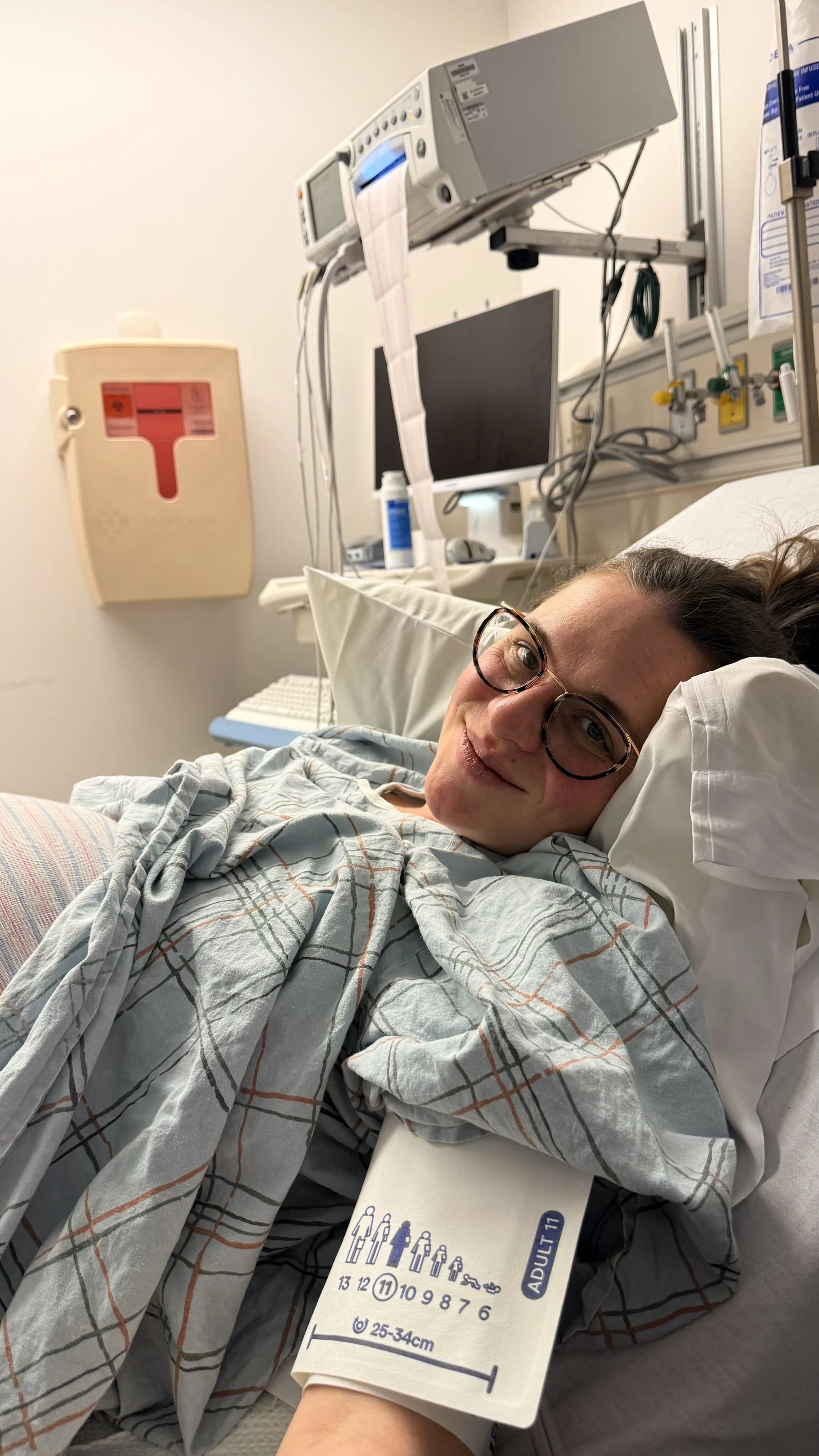
The placenta was ,I have a whole thing about placenta, but it came at the end of both babies. Yeah, I was gonna say, but there were two. But they were like one massive placenta. That was actually the second largest placenta on record at the hospital. What? No way.
Lisa: 38:18
That is fascinating.
Jillian: 38:20
Yes, it was and it was as heavy as the babies, they were six pounds each. Each baby and the placenta was six pounds as well.
Lisa: 38:29
What? Holy moly.
Jillian: 38:33
Yeah, because they were in this, like each of them was in like this larger placenta entity.
Lisa: 38:41
Okay.
Jillian: 38:42
So yeah, 18 pounds of all of a sudden exiting my body.
Lisa: 38:46
Wow.
Jillian: 38:49
And so that was the order of things. And so yeah, she was very bold, and after it went successfully, you could tell she was very confident in her decision, the provider, to make this call because it was again, it was pretty ballsy, but she was like, Let's do it. So I got my pain med, I went back to the room. She actually took a nap for 45 minutes because it was the middle of the night. So she's the OB's napping, and then I'm feeling a little bit of pain relief and the ability to rest a little bit more.
Lisa: 39:26
I was gonna ask if you got to nap.
Jillian: 39:28
No, no, didn't nap. Rested. Okay, yeah, but just could take a beat, like not being in the OR. And this is the most amazing part of the story. The labor and delivery nurse was in there helping us reposition a bit since baby B was posterior. So they just had me put my leg up in a stirrup to try to twist him slightly, low level of intervention, but it did help maneuver him naturally. And then right the pain nods are setting in, and I got to nurse little baby A, and the nurse helped me to put him on the breast and get things going, and that was just beautiful. And I have videos my husband took of me like excitedly nursing him and getting coached in how to do that, but then wincing, you could see my eyes being like in pain because I was contracting with the other baby at the same time. So it was this remarkable thing that a lot of people don't get to experience, right?
Lisa: 40:35
Very uncommon.
Jillian: 40:37
Yeah, it looks so beautiful and so painful at the same time, and it's unbelievable to this day. But they helped each other be born, right? Because the nursing helps with contractions after giving birth and to help heal, and so the same kind of thing I imagined was happening.
Lisa: 40:54
Yeah, that's what I was thinking.
Jillian: 40:58
Wild. So that was good, and then I started feeling I know how you described the urge to bear down and like rectal pressure, and I hadn't really felt that with baby A as much for whatever reason, but with baby B, I did start to feel both of those things a lot more clearly, and so I knew it was time, and OB came back in, and then I just pushed for probably about 15 minutes, and baby D was born. They didn't need any forceps or a vacuum ultimately, even though he had journeyed down so far, but it did take two hours and 16 minutes for me to be. So that's how we got there.
Lisa: 41:45
You needed a little bit of a rest, it would seem.
Lisa: 41:48
Yeah, it was baby needed time to come down, yeah.
Jillian: 41:53
Yeah, no, it was just so exhausting. That was my biggest takeaway, like the pain of the contractions that I described. But then the pain, the pushing and like the baby crowning and all that for me was not a painful thing. It was just the pain of the contractions and then the exhaustion of the pushing, even though it was short-lived in both cases. It was just so much work.
Lisa: 42:17
Here's something I'm wondering with baby A in pushing. You mentioned you didn't really feel that urge to bear down in the rectal pressure. I'm wondering if the epidural medication was if you were more numb at that point. Whereas I'm guessing they would have turned off the epidural when they gave you the narcotics, the fentanyl. Uh so that I wonder if you had regained some of the nerve sensations in that region by the time that baby B was being born.
Jillian: 42:45
What do you think? That is it. Even though I only had the one dose of epidural early on, I think it was still affect like in my system, and that's why. Yeah. Yeah, interesting. Wow. So yeah, so then baby B comes out, and I also nursed him right away. He actually had to be on the CPAP machine briefly for some respiratory issues, and I can explain a little more about that later, actually, because he got admitted to the NICU after we came home for a week, maybe because of that. But so they were contemplating sending him to the NICU right away, but then I nursed him, and we were just having a happy family of four moment and photos, and he was also doing great with nursing right out of the gate. Neither of them had tongue ties. We were just a great little team, and they decided not to send him to the NICU, and that we could just be together. It was stressful, I think, especially my husband seeing little Owen, the baby B, with some of that machinery early on, and he was again running back and forth between all of us and also holding Gordon. But I was uh yeah, he was ultimately okay, just more dramatic of an entrance than. ABA. And yeah. And then we were in the hospital for a good amount of time. And Owen had some jaundice, so he had to get UV treatment. And I was self-expressing colostrum. And then they were feeding it to him in a syringe for the time that he had to be away from us. But ultimately they both came home with us from the hospital, which is also super rare with twins because it's so common to have NICU time. And we did ultimately, but we did get to go home as a family and had two beautiful days and two sleepless nights figuring out what the heck swaddle to use and who needed what? And making sure they were safe in their double bassinet. But yeah, that was the labor delivery birth story.
Lisa: 44:53
And do you feel like in pregnancy, given how frequently I feel like more often than not, twins do spend some time in the NICU? Did you feel like the twin adversity prep or your practice, your doctors prepared you at all for that piece of it, the NICU part of it?
Jillian: 45:13
Not too much, aside from hearing mostly through that WhatsApp group. It was people's story. Cause like when someone knew joined the group, they'd be like, These are my twins. This is a little bit about my story. And or someone's in the NICU, and they all explain their stories that relate to the support of that person. So I'd heard a lot about it in other Facebook groups, people posting their experience and getting the support. I'd read about it through that, but I don't know, it was less like a kind of prescribed thing by my doctor saying this is the likelihood of it happening.
Lisa: 45:49
And then do you want to share how you knew you needed to take the baby back?
Jillian: 45:56
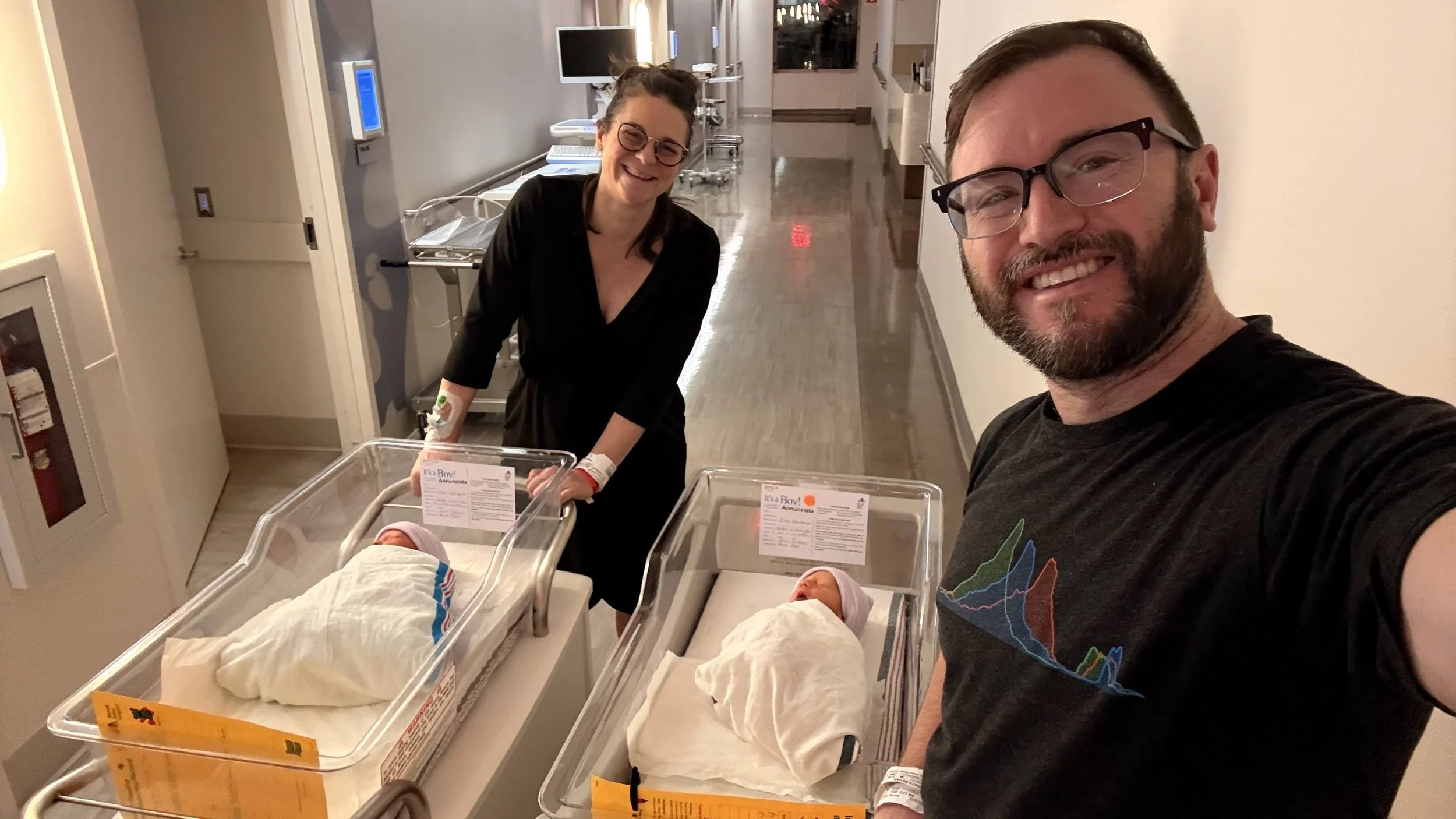
Yeah. So two days after we got discharged from the hospital, we went to their pediatric visit. They both ended up having a pretty bad jaundice. So we had to rush to the NICU for just the jaundice, which is extremely common and not that risky. But of course, if it is too bad, it can be. So they got that under control for both babies. Baby A. Gordon was released the next day, and he still had bad jaundice for about two months. And for the following week, we had to bring him to the pediatrician a million times to get his little heel pricked to measure the levels and try different formula cups for 48 hours to cut out breast milk so that he could get rid of the bilirubin more effectively. So that was a little jaundice journey with Gordon. But what ended up happening with Owen was his levels were also low enough by the next day he would have been discharged too. But they found that his blood oxygen levels were dipping because he was hugged up to the monitors and the incubator. And that during labor and delivery, there was a little like all babies have little holes in their lungs and hearts, like in utero, that then close soon after birth. But a little bit of air escaped from one of his lung holes. And so it was like trapped in the area around the lung, and that was causing some irregularities in the blood oxygen levels. So it wasn't even the hole that was the issue, it was just that little air escaping in the process of being delivered. So he had to be monitored and just strengthen those muscles and work out the air, which only thankfully took a week. It was a very hard week because we had one night with no babies where we could catch up on some sleep, but that was hard in some ways. And then we had six nights of one baby, which was like great to have one of them, of course, and to have kind of training wheels for the future of having two babies, but we weren't getting much sleep, and it was really sad and hard. Your heart's in two places, yeah. And I had all these feelings of not wanting to bond with him as hard because I felt sad that I couldn't give the other one equal bonding. And I was going to the hospital every day, and for baby B and for baby A's jaundice, we were actually going to the pediatrician like three days in a row at one point in that first week. So we'd go to the pediatrician for him, and then we'd go to the hospital for him, and then I'd pump a bunch of breast milk, and then we go home and rinse and repeat. So it was a really tough week, crazy week for my new body adjusting to breastfeeding, being in that kind of cycle of having to pump a ton at certain parts of the day. But ultimately, it is a blip in the radar, like they said it would be, and was only a week, thankfully. So many families, NICU families, are there much, much longer than that. So no more complicated issues. But yeah, it was tough. And it was the middle of winter, and we were like schlepping two newborns all over New York City.
Lisa: 49:11
Oh adding to things, yeah. Oh and did they when they released Owen from the NICU, did they give you any, did you feel just very like at ease that everything's fine now? Or did they give you any tips on this would these would be signs to look out for that would say be a sign to bring him back or anything?
Jillian: 49:38
Yes, they definitely advised on certain things, but it was more just like anything you would need to know with a newborn at that point, as far as a fever or irregular breath. And then he had a cardiology appointment a few months later for a little hole in the heart, again, that every baby has, but his, I guess, didn't close and like they thought could have been related, but that appointment went fine, thankfully. But we did go and follow up. And yeah, no, we were just able to settle back into what we had felt those first couple days and kick it off as a family of four, and it just felt so amazing having him now. Like I couldn't stop holding him and smothering him with kisses because it was so hard not having him, and then all of a sudden, with like I don't know, it was it just was our normal, and then we didn't want it to be normal, and then thankfully he came home and then we could hit the ground running from there.
Lisa: 50:44
Something to go back to the whole placenta topic. I still have a question on this because okay, so it was a di-di pregnancy, right? And for listeners, do you want to share or I can share what that means? Because a lot of people probably don't even know what di-di is.
Jillian: 51:01
Yeah, you might explain it better to me, but my understanding is there's two placentas and two amniotic sacs versus we could have any other iteration of that, right? Especially, and it's more common. I did learn recently that you can have identical twins who have that, but I think it's much, much more common with identical twins that they share either an amniotic sac or a placenta or both.
Lisa: 51:22
But then it sounded like the placenta was joined, like they were one. Is that what you were saying?
Jillian: 51:28
There were two placentas for each of them, but they were in an overarching placenta entity that encapsulated both of them, and that thing was six pounds equal weight to each of the babies. You don't have a picture, do you? I wish, and I don't want to- I want a picture. I know I wanted more pictures overall and videos of the whole process. We did get the like nursing while contracting video, which I'm very grateful for, but I wanted that placenta and I wish I had it because my husband describes it in great detail that it had a mind and a life of its own. Like, not to get too graphic, but then the care team was freaking out about it too. They were like, look at this thing, and like it didn't fit in the container they put it in originally. They had to find a larger container. It was like a whole comedic relief moment.
Lisa: 52:20
You're like a superhero of some sort who grows this phenomenal placenta or placentas. Record breaking.
Jillian: 52:29
Yeah.
Lisa: 52:31
That is fascinating. Thank you so much for sharing. But dang, I want the picture. I mean then you want the picture more, even more.
Jillian: 52:39
It's like spilling out of its Tupperware. It's pretty graphic. I hope I've given you enough detail that I want the photo to.
Lisa: 52:48
Oh, thank you. And then one other question I had going back a bit, this is actually going back to pregnancy, but when you discovered or learned or sensed that Owen, that baby B, was high and at one point transverse, were there did you ever do any of the spinning babies things? Or did you just like trust that it would all work out? Or what did that look like?
Jillian: 53:14
Yeah, no, and I had heard of spinning babies and would have wanted to try, but I wasn't allowed to because of the fact that it could mess up baby A being head down, which is the last thing I wanted. Sure. That's the only chance for vaginal birth. But I just knew the care, like the providers that I chose were known for doing VVACs and being able to rotate baby B so that they're also delivered vaginally. A lot of providers won't even attempt to do that, and they are known for that sort of thing. And I had their kind of consent and agreement early on, at least from my provider, Dr. Shalina, who planned to deliver my baby, that she would be comfortable delivering them vegetally and trying to flip baby B if needed, as long as it was safe for me. So I just hoped and prayed that he would stay that way and then was going to rely on my care team, if not.
Lisa: 54:11
And then in the first stage, before leading up to getting the epidural, were there any coping comfort measures that you found particularly helpful?
Jillian: 54:21
Yeah, I took a lot of those ideas from your class and I did as many as I possibly could have, I think. I really liked Clary Sage Essential Oil. I was very into that one, and I kept demanding it. That was there for some random reason, but it helped.
Lisa: 54:45
And then what did you do with it? Was it on a cotton ball diffuser?
Jillian: 54:48
What was it? It was just like direct to the skin. I was like puffing it and rubbing some of it on my nose.
Lisa: 54:57
Uh-huh. Nice.
Jillian: 54:59
Straight shot. And then I had printed some of the affirmations that you shared and was like reading those aloud at one point when I was laboring. I tried before the epidural to use the yoga ball actually to do some movement. And we tried the all fours position too at one point, but I was just in so much pain that I didn't find them to be helpful. And just went back to, I guess I was using the peanut ball primarily, even before the epidural, and just like lying there contorting however I needed to. Obviously, the epidural helped, and the other bain meds helped, and my care team and the Mount Sinai West, given that they don't have their what did you call it, the birthing center anymore. But like I knew they were grounded in those principles, and they had a really beautiful new postpartum suite. So their facility, I was in my own room throughout the whole thing. So that was all wonderful. And I'll just say another kind of strategy or support for me during labor was besides everything I mentioned, some of those coping measures and laboring support position. My husband, of course, he was like again in the trenches, holding my legs, coaxing me through, bringing me that Clary Sage, bringing me that water bottle with the straw. So that was very helpful, random detail, but good. It really helped a lot. And the choice of provider and location, but also the birth preferences that you prefer. I was probably like a punch list that you shared. The tips around that were really helpful. And those icons that you shared of like play cord clamping, don't give them a bath. I worked really hard on mine and got some templates from friends and went over it with my primary OB. And it was really helpful for me to think through again, like what are my aspirations here, and then what is realistic and tempering the two and landing on a place that I was comfortable with. Brilliant. And aside from the OB changing at the end, I got a lot of those things, at least in the form that I had was comfortable with and compromised on some things, but not others.
Lisa: 57:16
And going back to moving from the OR to labor and delivery, I'm curious to know if you have a sense of was that Dr. Ree really wanting to honor your preferences? Was it that they needed the OR to free up the OR? Was it a combination? Did you get a sense of that at all? Or even intuitively?
Jillian: 57:37
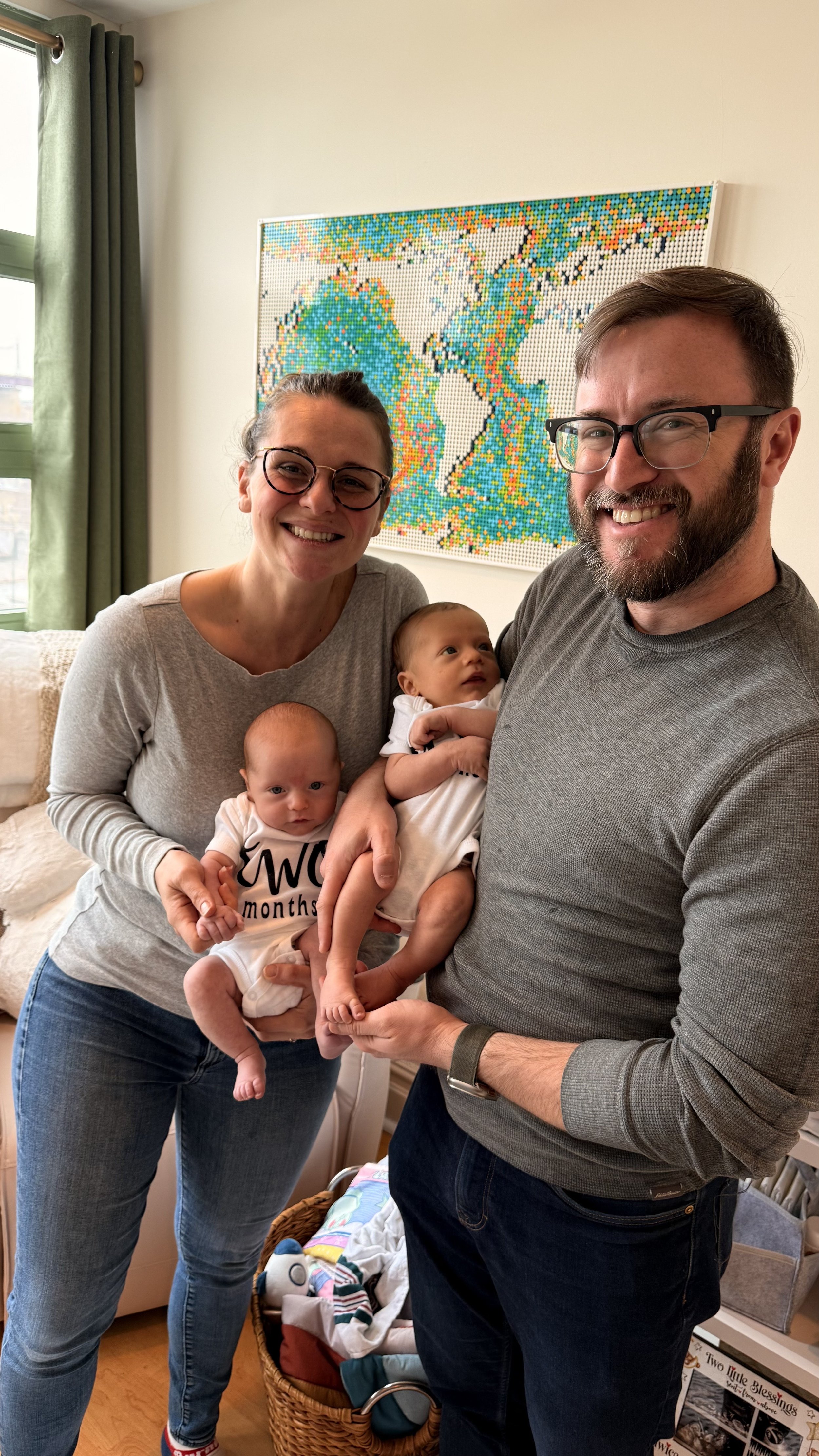
That's a good point. And I did want to circle back to this. So thank you. I think it was because okay, so this is a thing that I meant to mention. When I went over my birth preferences with her, kind of when we were practicing pushing before I delivered Baby A, we had the little moment where she was reviewing it. Again, we didn't do it in the visit, unfortunately. So she's reviewing it on the fly, not ideal. And she's just going, and she's a very direct woman, so she's just going, yes, no, we can do this, we can't do this. And I was kind of very nervously sitting there, and we had a tiff for one point. I think it was about the delayed core clamping where I'm trying to advocate for having that at least for baby B for at least a few minutes, and she wasn't willing to budge there. And then after she left, I cried to the labor and delivery nurse, and I was like, She hates me. So we had this low moment with that, but then she knew how much I wanted these things, and we were able to communicate that, and she was able to listen to it, despite it being this not ideal situation. And just given her values again, I think she knew that I wanted to live in badly and to have it be as little intervention as possible. So she made this courageous choice to go back to labor and deliver. I think just understanding my preferences. And I was starting to save earlier, I think she was really proud of herself when she came and visited me in the hospital a couple days later. She was like, We did it. That was pretty rare. And I think we made the right decision. And like she was excited. You could see that she probably doesn't do that every day, and that she thinks she made the right call. And obviously, the outcome was really good, and so she was excited and proud of herself. And I was very grateful that all was able to unfold like that. And it was like the talk of the town, like all the nursing staff would come in and they start looking for a C-section scar right away with a twin pregnancy. Or many of them had that assumption, and understandably, but then not only did I deliver them vaginally and kind of shocked them, but hearing the transition of rooms that we did, they were pretty amazed. That's so cool. And reminds me, I haven't talked about my beloved postpartum dual yet.
Lisa: 01:00:00
Yeah. So is this a good time to move into you've already talked about some of postpartum in terms of the NICU stay and all of that. But then yeah, feel free to share anything else about postpartum and demi, your postpartum doula.
Jillian: 01:00:12
Yeah, exactly. It's a good segue, I think. I'm ready to go there. So she was very excited to hear my story. We hired Demi through your um Nish River Dual Collective. Um, and we were originally going to hire a birth doula, but decided not to ultimately, again, with some of the restrictions of twins, but are very happy with having had her postpartum for many reasons. But yeah, she was amazed at my story. She's excited to tell her doula colleagues how it had gone. And she was even she went as far as to say that even if we hadn't contracted her for birth, but we had ended up our prenatal visit, we didn't get to have because I went into labor early. But she was like, even if we hadn't been contracted for birth, she's I would have come and tried to be present if they would have let me like on the house because I was just so curious about a twin delivery. And I don't think she's attended once. I wish that had happened, especially given how it went and how much we loved working with her. But anyway, she was great. We had her a few times a week for a few weeks. So she was there that first week where we only had the one baby, and then the second week with both. And it was wonderful to have her really just normalize everything we were going through: like how to care for a newborn, which swaddles to use, why, and how to administer the gas drops or the little thing that makes their gas release, or the snot sucker, like all those things were overwhelming. And she would just give us a little demo of this or that. And she would tell us constantly, like how well we were doing, even for singleton new parents. And that was really reassuring to hear asking any questions that came up from the night before. We tell her how the night went and talk through that. We would ask her any questions that came up in the past couple days since we saw her last. And um, she also recommended products for me for healing and helped me like massage my mama wrist and to show me how to care for my contracting uterus or what do you call it when it shrinks back down? Yeah, the after pains, yeah, involution process. Yeah. Um, so yeah, highly recommend working with the postpartum medulla, and she was just a great resource for us. So that was the postpartum doula, and then I could talk about nursing too. Yeah, please. Sorry, I will ask one follow-up.
Lisa: 01:02:44
Do you remember at what point in your pregnancy you hired Demi? You decided, yeah, this is gonna be a helpful form of support.
Jillian: 01:02:54
It was later, like we had done your dual meet and greet when we were thinking about a birth doula, and we went through that interview process, and then that was another thing we had to grieve and decide on was like not ultimately working with one for birth. Again, because of just to shed a little light there, like the fact that we had to give birth in the OR, and they're often not allowed in as a third support person because my husband was going to be there, and for other reasons that we likely couldn't labor at home much or and we didn't at all. So, anyway, but that was a hard kind of thing we had to decide. And then after going through that whole process, my due dates or when I was giving birth was rapidly approaching, and we decided we did want to work with the postpartum doula and then had to go through the process again with that lens. So we didn't end up hiring her till the week before we went into labor, I don't think, and didn't even get to have that prenatal visit. But we did have a little meet and greet with her and made the decision. And it was just later in the process.
Lisa: 01:03:52
And did you just decide yes, we absolutely want support, even though in that first week, even though we're only gonna have the one baby, or did you pre-arrange the timing of that? I'm just curious about how all of that played out.
Jillian: 01:04:08
Yeah, we had a little contract for a few weeks, and we just followed through on that, even though things changed on our end. But very grateful that we did because it didn't again, it was just like training wheels. So we needed her help with normalizing caring for a newborn, whether it was one or two, and then it was a nice evolution into having the second one and having her support with then two of them and different needs that they had, like one's little stump had fallen off in the NICU, so then we were bathing him differently than the other one, type of thing. But she walked us through it all then.
Lisa: 01:04:43
So many fine little details, granular details that I've never thought about. Oh, yeah, that timing's gonna timing with a lot of things may not be in sync with each other. Oh my goodness. And did Demi I'm guessing she just supported you at home. Was there ever any like going to the hospital with you?
Jillian: 01:05:04
No, we just had my parents do that a couple times, like to watch Gordon while we had to go in with Owen and stuff like that, because he the other baby couldn't go in after you were discharged. So we had my parents for that kind of thing. So Demi helped us with everything he said, and also she cooked some and did some laundry and other things like that, and everything and anything that we needed for her at that time, but didn't go to the hospital, no.
Lisa: 01:05:29
Okay. And before you go into the feeding, feeding stuff, were there any practical tips that you wish you had known, practical logistical things about having a baby in the NICU just at all, or having one at home and one at the NICU? Any things come to mind in terms of things you wish you'd known that were really helpful as you were going through it to figure out?
Jillian: 01:06:01
I'm trying to think, like it was just it helped us figure out how to get out the door efficiently with two babies. I'll tell you that much. Because, like I was saying, every morning it would be like pediatrician for Gordon's jaundice and then hospital for Owen with the baby. And then yeah, as soon as Gordon was out, one parent would have to stay with him while the other went in. And then I would go in or out and pump a lot of milk. That was, and it's a good segue to the nursing part of this conversation, but wasn't ideal that I instead of a one-to-one for when you normally feed them, I was like going there and just pumping a ton of milk with their hospital grade pump and leaving it there. I wasn't pumping at home at all at that point. So I can't even wrap my head around the logistics of that whole part of it because I don't think we did it that well. But I also wasn't in a position to have the energy to figure out the best way to do it.
Lisa: 01:06:58
Sure, you're doing the best you can.
Jillian: 01:06:59
Yeah, that makes my head explode a little bit or a lot. I honestly still can't even figure out all that. And I had support, lactation consultant support, thankfully, but it was still just like too much. And that's, I guess what I'll say is I'm glad it was this little sprint of only a week because we didn't have to think about the logistics of NICU time and having one baby in, one baby out longer term. That would have been really tough. We were reaching our breaking point, and then it ended, thankfully. So it was just this sprint of everything I just said there. And like my body was reaching its breaking point, and other areas of our lives were too emotionally, of course. Our parking situation at the hospital was getting really expensive. Like every way you could slice it, it was just logistically very complicated and exhausting. But then thankfully for our case, it ended after a week. It would be really tough to have one home, one in the NICU, and for that to last a long time. Our friends had both of them in the NICU, and luckily, we were talking about it the other day, they both were discharged the same day. So that's much harder in that they're there for a longer time, but easier in the sense that fortunately for them, they were discharged at the same time. So that's really a silver lining in their story. So yeah, it's just not ideal, no matter which way you slice it. But we try to appreciate the areas of our experience that worked as well as I could, and then acknowledge that there were tough parts of it too, very complicated parts. All right, thank you for feeding.
Lisa: 01:08:41
We've already gotten a tiny glimpse into the complications of babies not being in the same place and everything. So yeah, share more with us. Yes.
Jillian: 01:08:50
So I've had a really good breastfeeding journey, thankfully, especially with tandem nursing twins. We read the Twiniversity Nat Diaz's book or took her class, What to do when you're breastfeeding too, and learned as much as we could from her in the pregnancy about what to do. And then postpartum, we're joining her like monthly group where you get to talk to a twin-specific postpartum doula and birth doula and ask any questions you want in a small group. And we didn't do that during pregnancy, we've been doing that since, and it's tremendously valuable. So she was coaching us. But before we got home, I guess I should back up and just say the labor and delivery nurses like I was explaining while we were still laboring, and then in postpartum, the nurses and the IBCLC lactation consultants were both really helpful. And I did my best, like I think you advised to ask as many questions as possible to them, get as much hands-on support as you can. So we did that, and neither baby had a tummy tie. I was able to produce enough milk and have been. And like I said, I hand-expressed some colostrum even for Owen getting UV treatment. So we had really good practice in those first few days in the hospital and off to a good start. And then a quick word on pacifiers when they were admitted to the NICU, they both used pacifiers to soothe them. And I didn't worry about nipple confusion because they had already latched well, and even though it had only been a few days, but they did that, and the pacifiers have been helpful to us since, and the breastfeeding's been going well since. So there that was all great. And then I have an IBCLC lactation consultant, the highest level of lactation consultant, through my insurance through work. So it was just a virtual thing, but she and so was the Twin Diversity support, but they and she was just called, there wasn't even a video associated there, but she's been a huge resource because I've had unlimited support from her. So as we went from the Nikki days to re-adjusting my breasts and my supply to a normal schedule and not pumping at all, and then some pumping later, but she was a huge resource for that ever-changing journey day by day in an experience that is way more complicated than the very natural process that it appears to be. So we have been through like so many different plans and schedules and ways of doing things and incorporating bottles and formula and breastfeeding and in every way you can imagine. But basically, we've done it all and we're at a place now, really, we have been since the first night they were home out of necessity of two babies crying in the middle of the night. We put them on this crazy double breastfeeding pillow called my breastfriend, and it's like a really thick, structured foam in there. So they and the single version of it, yeah, football hold. That's my main position for them. Sometimes I'll have them both lying on me like this, and like rooting around. It's really cute, but I feel like it's just less effective because of gravity. So they're mainly like this, and yeah, they did it night one and since, and I just do one baby, one breast, one feed, and then we switch, so it's pretty straightforward in that regard. And my supplies have been good, their latches have been good, and so we did, and they're gonna be 16 weeks tomorrow, so almost four months, yeah.
Lisa: 01:12:48
And you switch them. The thing that pops into my head as a possible line of thinking is just for their physiology, so they're not always like one on one side and like with their spine angled it a certain way. But any other thoughts on the thinking of just feeding them at each feed on one side versus like swapping.
Jillian: 01:13:10
Wait, sorry, I'm missing the question. Are you saying switching during each feed? Switching weeks? Yeah, just curious because that's what singleton moms do typically depends on the person, but yeah. Yeah, and we like explored that option. That was another like one of the things to figure out early on. And some of the professionals said one thing and others said different things, but this just seemed more straightforward to me. And ultimately the baby gets the full spectrum of the milk each feed, so we went with and it's less to track, it just seemed more straightforward in a thing that was already too complicated. Yeah, great.
Lisa: 01:13:53
You do what works, you figure it out, and yeah. And did you feel like it was more necessary with two to really hit a schedule sooner than we might have with just a single baby?
Jillian: 01:14:07
Yeah, that's a good point as well. Because I don't think I am a project manager, but I'm not very type A at the same time, and I run late, so I'm a bit of a juxtaposition in that regard. And so I'm not that overly scheduled, even though my job is to keep things on time and on budget. But with them, I have been really listening to the schedule because that's what the twin professionals recommend specifically, and more so keeping them on each other's schedule than a schedule throughout the day, but it has evolved to be that too. So we've always done kind of two to three hours, but when the first baby's hungry, they both eat, and now it's also we feed them, we wake them up at seven and feed them, then ten, then one, then four, then seven, and then they sleep eight to nine hours now, so yeah. But that's always been the driving force is if one baby wakes up to eat the other or needs to eat, the other does too, more than anything else. And the schedule's helped them and us, I do think it really has.
Lisa: 01:15:12
I was thinking about you parents, was the first thing that popped into my head of you cannot be feeding your babies all the time. It already is all the time in the very early weeks and to some degree months, but with two, you gotta something's gotta give. You have to keep your mental health in check and be able to get sleep too.
Jillian: 01:15:32
Think about the math. If you feed a newborn baby eight to 12 times a day and they want to eat at different times a day, then that could potentially be 24 hours a day. Yeah, yeah. So wanted to avoid that. And yeah.
Lisa: 01:15:50
And do you mind my asking if you remember off the top of your head, the virtual platform for your IBCLC? You said it was through work.
Jillian: 01:15:56
Yes. So I have kind of MVP health insurance slash Signa, because I'm in New York City and the network doesn't reach the city. And then through that, we have corporate lactation services. Is what they're called. They’re based in Vermont.
Lisa: 01:16:13
Interesting. I was expecting it to be one of a couple of online platforms that I knew about already, but that I have not, I'm not familiar with that. Great.
Jillian: 01:16:23
Yeah.
Lisa: 01:16:23
Sounds like you got a good surprise.
Jillian: 01:16:25
I was yeah, I was assigned one. She's an expert in many years, decades of experience. And she might even be based in the south, but the company's based in Vermont. But yeah, she's just like unlimited access for me, assigned to me. And it's been a tremendous help.
Lisa: 01:16:41
What a nice company benefit.
Jillian: 01:16:43
That's our health insurance benefit, both and one other newborn care-related thing, not nursing specific. But again, just was grateful for the part of your course that touched on that because of that growing anxiety a couple weeks out. One that, like, we know nothing about how to care for a newborn and needed that information download. One thing you talked a lot about was the five S's and the happiest baby on the block bookslash video. And we implemented it and swore by it, and we did watch the bit video in full and got the book. But since we were in the hospital, my husband was like Mr. Swaddle Master and doing like side to soothe them and all of this pulling out all the stops, especially in those first few nights. But yeah, for those few months, really, like people, our friends and family were like, Whoa, we were just like ninjas of one, two, three, four, five. And we like it was working, it really worked, even for two babies. Everyone was like, dang, you're good at this as new parents because it's a good formula. I couldn't do five out of five on that one.
Lisa: 01:17:57
So glad that was helpful. Yeah, that was gentling the transition from the womb to the world. It just makes a lot of sense in replicating some of those womb-like aspects of the environment.
Jillian: 01:18:11
It's a huge transformation for them and adjustment for them. Everyone says it's not easy being a baby, like sarcastically, but it's probably not. Yeah, absolutely.
Lisa: 01:18:22
Yeah. So I'm thinking about given that having twins and having a baby in the NICU, those are both additional risk factors for mental health challenges. Are there any reflections on the mental health piece of it, things that have helped support your mental health, or just yeah, any anything you want to reflect on that for you or Danny? If Danny's comfortable with sharing.
Jillian: 01:18:49
No, he just joined a new dad support group through our pediatrician. They connected us, and we both had, I think it was about like five weeks in where he started it by being like, the crying is driving me crazy. Because they would go on like surround sound sometimes with both of them crying at the same time. And a lot of it was like fussiness related to gas, but diagnosing that one is particularly hard. And when they're both crying at the same time, and just at that phase where it's that like purple crying, it is torturous. And so he needed, he like had a bit of a breakdown at that point and needed some space and needed a regroup. And then it triggered me the next few days later. Once he had his space, it like hit me in the second wave of the same thing, and that was hard because also because it was like we were running on adrenaline until that point, it felt like a bit, especially with the NICU stuff where you're just like in survival mode, and then after that, even you're in adrenaline, you have so much adrenaline in your system because you're monitoring them and having this huge transformation of your life, and with time passing and figuring out a few strategies that subsides, and the exhaustion deep in your bones sets in, along with some of these feelings that you let yourself start to have about how hard it is and how mind-numbing the crying is and stuff like that. So let's say for both of us, it was around that five-week mark that it got really especially challenging postpartum. But otherwise, I think I've fared quite well with the postpartum depression and risks and whatever feelings are on that spectrum, mainly because we've had family support coming in and out to help. We've had our postpartum doula, we've had our twin and other local parent support groups, and that's helped stave it off, along with the fact that Danny has been home with me, my partner, for all four of these months, and he actually starts a new job very soon. But it worked out where he was between jobs and we made it work so that we could both be here home, all hands on deck this whole time. And that was tremendous. That's huge.
Lisa: 01:21:17
Yeah.
unknown: 01:21:18
Yeah.
Lisa: 01:21:19
Gotta have that support. Yeah. All right. As we start to wrap things up, was there anything else that you didn't get to share yet that you'd like to share or any final kind of themes that you'd like to reinforce or tips for especially any expectant parents, but especially those expecting twins?
Jillian: 01:21:39
Yeah. I'll just say what I said earlier that I hope anyone listening, but especially the parents expecting multiples, that like try to temper all of the negative things you hear about high-risk pregnancies and the complexity and the potential risks and negative outcomes with doing everything in your power to advocate for what you hope to have your experience be, and you know, understanding that your expectations should be realistic, which they will be from hearing all of that all the time, but that leaves space for being hopeful that you can advocate for those things and get them and in maybe a slightly more in adjusted form, or in some case fully. And you could have a lot of those positive experiences and outcomes, even in a more complicated pregnancy. So just leave space for that positivity in your journey.
Lisa: 01:22:51
Yeah, absolutely. Thank you so much, Jillian. This has been wonderful. Thank you again for sharing. I had no idea about some of the amazing aspects. You're record making placenta.
Jillian: 01:23:07
My biggest plane to fame, yes.
Lisa: 01:23:09
And shifting from the OR to the labor and delivery room was also a big surprise, a delightful surprise. So cool. Hadn't heard of that happening. So I love that. And yeah, I'm just so grateful that you were willing to share and for that it sounds like you felt like things went overall fairly well with a few twists and turns that were unexpected and challenging. But yeah, yeah, yeah.
Lisa: 01:23:34
So happy for y'all.
Jillian: 01:23:35
Thank you, Lisa, for the opportunity to share. I've been telling my story obviously for the last few months and realizing settling into it and realizing how grateful I am and proud of it that I am. So thank you for the opportunity.
Lisa: 01:23:47
Absolutely. I'm sorry we didn't get to see Danny. I wish him the best with the transition back to work. Do you want to check with him and see if he wants to say anything? No pressure.
Jillian: 01:23:58
He's coming, he's gonna do a cameo.
Lisa: 01:24:00
We could do a little postlude.
Jillian: 01:24:01
Yeah, Lisa wants to say hi.
Jillian: 01:24:08
No, he's been so incredibly hands-on and like super dad with twins. Just obviously the need is just tremendous, and he's been here for all of it. Again, good to see you again so soon after the reunion.
Danny: Good to see you. Well, thank you for hosting that. That was wonderful.
Lisa: 01:24:25
Yeah, so glad y'all could make it. Anything you would like to share? We were just wrapping up the story, the sharing time, but I love to hear from partners in case there are partners listening. Anything that you would like to share? No pressure, but just wanted to invite you.
Jillian: 01:24:43
I knew this was possibly coming, so you're not too caught off guard.
Danny: 01:24:47
No, no, a few things. It was really impressive to see Jill go into like second gear during labor, where uh like you were just pulling energy from places that you didn't even know you had to push out two kids. So that was doubly impressive there. And also something that'll live in my mind rent-free forever is watching you breastfeed Gordon and then having contractions to help move Owen along. So that was pretty impressive. But then the kind of funny thing, which I would say solidifies some of our character with how we each treat urgency. So when Jill's water broke that infamous night, Jill's like, I think my water broke, and my mind goes, Her water broke. If you think it did, it probably did. And then Jill's like, oh, we can chill out here for a little while. I'm like, no, we're leaving right now.
Jillian: 01:25:36
I was so focused on the eggs and the soup.
Danny: 01:25:39
So Jill's water broke, like the first trickles of it. And then I'm like, okay, we're getting all the stuff. Let's get in the car, let's get to the hospital. And Jill's like, oh no, we can slow down, it's not that big a deal. I'm like, no, I'm packing, I'm moving, I'm throwing shoes on, I don't care. And Jill's like, I gotta eat now.
Lisa: 01:25:56
I know I was gonna say it. Jill, are you over here downing the egg and toast real for real fast?
Jillian: This is all that matters.
Danny: 01:26:01
So I was thinking, okay, how do we make stuff that we can just get moving with? And then I microwaved chicken noodle soup, threw it into a thermos, and then decided, like, all right, you're gonna eat this on the way, we're gonna go. And then Jill's water really started to break. And I'm like, stop sitting at the table, stop chilling. We have to go. So then we ended up leaving. But I did think, oh, I have to be the good Instagram husband. So we took one last selfie of us leaving the house, and that was my Jill. We'll like this, it'll be a fun memory. But like for me on the inside, I'm like, we have to go. But yeah, and then the rest is history from that one, but it was impressive the entire way.
Jillian: 01:26:44
And tell Lisa about your speaking of you capturing or not capturing things on film, the placenta. Tell Lisa about your experience with it.
Lisa: 01:26:55
I was saying, I wish we had a picture with this record-breaking placenta.
Danny: 01:27:00
It was up there.
Lisa: 01:27:01
Do you have a problem with blood?
Jillian: So tell her how it just moved out. So it's life of its own.
Danny: 01:27:06
It's an interesting thing where because it was a twin placenta, one umbilical cord was out basically the entire time. And when Owen was pushed out, a clamp, and I had my eyes on Owen because he had a little respiratory issue coming out. So my eyes were on him most of the time because I wanted to be sure he was okay if we had to go to the NICU immediately or what have you. So my eyes were there, and then Jill said, Oh, how is he? And I turned around, and in that moment, I thought for a second I saw the two umbilical cords claw at Dr. Re like it was a sci fi movie. But then I just saw the entire placenta come out, and it was basically the size of one of our children, so it was like a third kid. But for me, like it objectively, I'm thinking, oh, it just rolled out. But for me, it looked like it had a life of its own and it was like kept going. But the funny thing was that our doctor, she was like, We're gonna need a bigger tub for this one. So they said, okay, go get it. And then the other nurses are like, I think this is a hospital record, we have to weigh this. And it was like two to three grams off of the hospital record on that one. So it was one to see.
Jillian: 01:28:34
I think you will never see it. Only
Lisa: Your sons were well nourished through that thing.
Danny: 01:28:41
But if nothing. Actually, if I am gonna throw in like one more partner sharing thing, please. It was going into it, I thought I don't want to see anything. I don't wanna I know I have a very photogenic memory, so a lot of things like imagery sticks around and it doesn't go away. So I was afraid initially of watching the miracle of birth happen. And I'm glad like in the moment I got over that because it was unbelievable to see like Gordon's face come out for the first time, and then just see a shoulder pop out, and then just all of a sudden, oh, there's feet
Jillian: 01:29:20
Reaching up and pulling them out. You know, yeah. You didn't expect that.
Danny: 01:29:22
And it was amazing, and I I enjoyed it so much I made sure to keep eyes locked on for when Owen was born to see that whole thing
Lisa: for two hours.
Danny: So it's nice to have that in my mind to replay it because I didn't think the way that I initially thought about it was not how the memories live in my mind now, which is nice. The only thing is just watching your third child that placenta come out. That's it's in the same folder, it can't separate them, but still it was amazing. So I thought I have talked to other dads about this one saying, Oh, about 50-50 will say they're glad that they watched, and others are like, All right, I need some recovery time from that one. But uh, but I'm definitely in the camp of I'm glad that I was attentive and present and taking it all in because I'm leaving with a lot of good memories.
Jillian: 01:30:14
And you weren't just watching, you were so actively holding my legs and helping me push and coaching me through it, and right there, but then also right monitoring the two babies and the process at the same time. So it's a lot for you too.
Danny: 01:30:28
Yeah. There was a lot of discussion that you guys probably had about whether or not we could have a midwife or a doula in there. So a lot of my friends who I spoke to, they're like, You're the doula now, you're the midwife. So you have to be encouraging and supportive and all those things.
Lisa: 01:30:42
And no pressure. Sounds like you did a fantastic job though.
Danny: 01:30:47
I would say the one percent that I did contribute towards it to like A plus, maybe. But yeah, Jill was, you know, woman on fire for the whole thing. It was fantastic.
Lisa: 01:30:59
And did I hear we were talking about the five S's soothing the crying babies? I heard you're maybe a baby whisperer a bit.
Danny: 01:31:07
Easily the best Google I've ever done in like 20 years. But yeah, it was surprisingly effective, especially for our more fussy kid who if they listen to this one later on, that's a misery to us.
Jillian: 01:31:22
Swaddle inside you were doing from a shush, you were doing from the hospital, and it was super effective literally from day one. So yeah. Yeah, diaper changer of the year, too, double whammy, fifth. What's our stat? 150 diapers per week for newborn twins. So this guy did all of most of them.
Lisa: 01:31:43
I remember when you sent me a picture, it said like how many diapers. Oh yeah, all the stats. That was so cute.
Jillian: 01:31:50
Danny knows because he changed all of them. So he wrote that down.
Lisa: 01:31:55
Thank you so much, Jill and Danny. It's been such a pleasure hearing from you. And I know it's gonna be a great support to other growing families who are expecting twins and as well as other expectant parents as well. Yeah. So wishing you well and you're an Astoria neighbor. So yeah, maybe we'll just meet up on the street sometime.
Jillian: 01:32:14
Exactly. You'll see us come from a mile away with our double strollers, and we'll look forward to the next meetup.
Lisa: Thanks so much.
Jillian: Thank you, Lisa, for the opportunity.
Danny: 01:32:24
Thanks, Lisa.
Lisa: 01:32:26
All right. So before we close things out today, I just wanted to mention the little known fact that Mount Sinai Hospital System here in New York City changed their policy in January of 2025 to allow doulas in the operating room for C-sections in surgeries that don't require general anesthesia, which is most cesareans don't use that. However, it often needs to be brought to the staff's attention if they are pushing back and saying they can't come in. If anyone delivering there would like a copy of the written policy to keep for your records, in case you need to show anyone, let me know and I'll be happy to send it to you. You can always reach out to me on social at Birth Matters NYC or email me at podcast@birthmattersnyc.com. Or even better yet, you could always ask the hospital or your provider for the most current Mount Sinai policy, depending on when you're listening to this. Ask them if there's been an update since January 2025, and hopefully that will still be the case. Too many hospitals in the New York City area don't allow doulas to support their clients during a cesarean, which is really unfortunate. So we DULAS were really happy when Mount Sinai changed its policy on this. Jillian, in her story, mentioned purple crying, and this is basically the same thing as what is also often called colic. Fun fact, purple is actually an acronym, and I'm gonna share with you what each letter stands for to give you a more detailed sense of what it means. The P in purple stands for peak of crying, and this means that we have these curves of early infant crying that start to increase around the second week after birth and uh peak around two months or so out from birth and then start to taper down. So just remind yourself if you need to, when you need to. It's not forever, it's temporary. And then the U in purple is unexpected. Crying episodes often start and stop seemingly randomly. Resist soothing is the R in purple. No matter what you try to comfort baby, nothing seems to help. It can be a really, really trying time for a parent. The P in purple, the second P that is, is pain-like face. Even though baby isn't in pain, their facial expression makes it seem like they are. The L in purple stands for long lasting. Crying jags can range from 30 minutes to several hours at a time. And then the E in purple finally is evening. The crying jags tend to be in what we call the witching hours, those mid to late afternoon hours, around like 3 p.m., 4 p.m. When we have a cortisol dip and feel extra tired, don't you know that's when the average to high crier or purple crier or colicky baby will go on a crying jag. And for anyone not familiar with the five S's, because I don't remember if we've talked about that on this show, uh, that's a concept whereby a parent is trying to replicate some of the aspects of the womb that the baby has been so accustomed to 24 hours a day, seven days a week throughout the whole pregnancy. It's very jarring to be suddenly born into this big, bright, dry, loud world. You can learn more about the five S's in the book or video called The Happiest Baby on the Block by Dr. Harvey Karp. And the five S's stand for swaddling, replicating the cozy confinement of the womb. And the second S is side or stomach, finding this angle while you're holding the baby on their side or on their stomach or any very, very exact angle in between that 90 degree range that triggers the calming reflex in the baby. It can be very powerful. It can take some experimentation and some patience and time, experimenting with you know which angle is the perfect angle for your unique baby. But once you find it, it can be really, really useful. The third S stands for shushing, and that is replicating the white noise sound of the amniotic fluid rushing around the baby's ears that's been very familiar and calming. And you can do this with your mouth, shh, or you can use an app or a white noise machine. And if you have technology that has more than one option and has the option of pink noise or brown noise, it seems that sleep researchers believe that those two are better than white noise for our deep restorative rest because there are fewer treble frequencies with the pink noise or the brown noise. The fourth S stands for swinging, and basically this is any rhythmic movement. It can be rocking, it can be swaying, it can be swinging. And this is replicating the movement in the womb that always lulls your baby to sleep. A lot of uh women, birthing people notice that when they're pregnant with their baby and they're moving about their day, that's when baby sleeps a lot. And then when you try to go to sleep yourself and you aren't very still, that's when the baby's like, I'm gonna have a disco party in here and I'm gonna kick you in the ribs. And that can be very uncomfortable. So uh, case in point. Swinging is very comforting for a baby. And the fifth S is sucking. This can be feeding, it can be baby self-soothing with their hand or their thumb, it can be a pacifier, or it can be a parent or caregiver's clean, uh washed hand, a finger for the baby to suck on. And you won't always have to use all five S's every single time you're trying to soothe a crying baby whose basic needs have been met. Because of course, every time your baby is crying, you just want to ask yourself, what do they need? And then once you have checked all of those basic things off, they've been fed, they've been changed, they don't seem to be gassy, they don't seem to be overtired, they don't seem to be too hot or too cold or have some clear sign of discomfort, all those basic things are checked off the list. Then that's when we can use these five S's. And sometimes they'll just need a couple of them. Uh, sometimes they'll need three or four, and then sometimes you will have to pull out all the stops because they are just so worked up and need some extra loving, and you'll have to do all five at the same time. But just start with the first couple and then build from there as needed.
Lisa: Alrighty, so here is a sneak peek of what's up in the next episode.
Genevieve: She looked at the baby and she was like, This baby is gigantic.
Genevieve: 01:39:26
That's why your birth was so hard. Um and later when we measured her, and she was like, Oh, she's 10 pounds, two ounces.
Lisa: Wow.
Genevieve: That's why you didn't have one of those peaceful Instagram births. Like you didn't push hard, which is exactly what it felt like. I wasn't just hanging back, I couldn't surrender. It was a very different feeling where I was actively moving the whole time, lots of dancing, lots of standing, and really I swear I think I couldn't lie down because I needed gravity to keep holding her down.
Lisa: 01:39:57
What I'd love to leave you with today are a few affirmations that Jill shared. The first one is my babies and I are working together. The second one, my body knows exactly what to do. And then the third one is people all over the world are birthing with me. So maybe meditate on one or more of those affirmations this week if you'd like to. Thank you so much for listening to the Birth Matters podcast. If you enjoy this podcast, try to think of a friend who might enjoy it as well and maybe recommend it to them. Not maybe, do recommend it to them. Um, if you're not already following or subscribed to the podcast, please be sure you are subscribed. And if there's a place to put a review, please leave a review. We would be so grateful. Thanks so much, and we will see you next time. Be well.